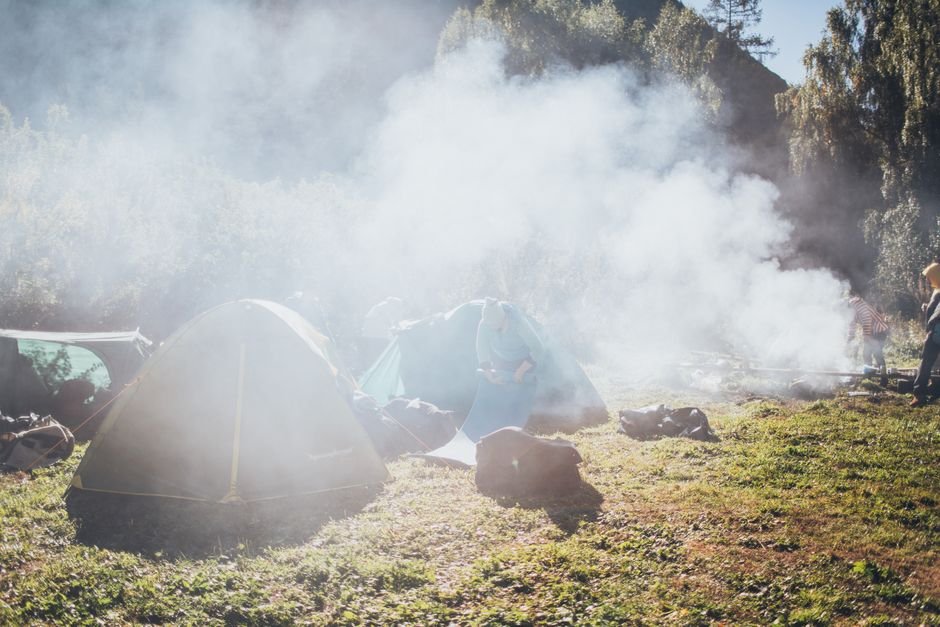
I picked the second weekend of April because the campground reservation page was almost entirely green. Every site open, no competition, no scramble at seven in the morning for a spot by the water. I thought I had found a loophole. What I had actually found was the reason everyone else stays home in early April, which I learned at about two in the morning lying fully dressed inside a sleeping bag rated for a season I was not in, doing math on how many hours were left until sunrise.
I read the daytime number and stopped
The forecast said sixty-four. Sixty-four is a lovely number. I pictured a fleece in the evening, sleeves rolled up by noon, coffee outside without hurrying. I packed for sixty-four.
The overnight low was thirty-one. It was right there on the same screen, one line down, and I saw it the way you see the terms of service. Thirty-one degrees is not dangerous with the right gear, and plenty of people camp in far worse on purpose. The problem was the spread. A thirty-three degree swing between afternoon and pre-dawn means the trip you packed for at two in the afternoon has almost nothing to do with the trip you are living at four in the morning.
That gap is the actual shoulder season lesson. It is not that spring is cold. It is that spring is two different climates in the same twenty-four hours, and the pleasant one is the one that sells you the trip.
The sleeping bag was the whole problem
My bag was a hand-me-down summer bag, the kind that packs down small and works beautifully in July. I unrolled it, saw that it looked like a sleeping bag, and considered the matter settled.
By eleven I was cold. By one I had put on every layer I brought, including my rain shell, which does not insulate but at least stopped the bag from feeling clammy. I pulled the drawstring around my face. I did the thing where you curl up small and then have to straighten out ten minutes later because your knees hurt. I slept in twenty-minute pieces and gave up around five, got out, and stood by the fire ring poking cold ash while the sky went from black to grey.
I was not in trouble. My car was fifteen feet away with a working heater, and at one point I seriously considered sleeping in it, which is a completely legitimate thing to do and I should have done it two hours earlier than I did. Sitting in a warm car at four in the morning is not failure. Refusing to on principle, at thirty-one degrees, is just stubbornness with a headache attached.
The ground was colder than the air
The second thing I did not understand is that most of the cold came from underneath. My pad was the cheapest closed-foam one I could find, about the thickness of a yoga mat. Air I could fight with layers. The ground just took heat out of me all night, steadily, from the parts of my body pressed into it.
Nobody had told me that the pad matters as much as the bag in cold weather, or maybe someone had and I filed it under gear-shop upselling. It is not. On my next cold trip I put a folded wool blanket under the pad, which costs nothing, and the difference was larger than any single layer I added on top.
I still think about how much I would have paid at three in the morning for something warm between me and that ground.
Spring is also mud
Temperature was the headline, but the trip had a subplot. The ground was saturated from snowmelt and a wet March. The site drained badly, my tent sat in a shallow depression I did not read as a depression, and by Saturday afternoon there was standing water at one corner.
Everything got muddy in a way that summer camping does not prepare you for. Shoes at the tent door, mud on the sleeping bag, mud on the steering wheel. The trail I wanted to walk was closed, which I would have known from the park page if I had looked, because early spring closures for trail damage are routine and posted.
Green on the reservation calendar was not a loophole. It was information. Empty campgrounds in early April are empty because the people who camp a lot know exactly what April costs.
What I would tell myself in the parking lot
Not “do not go.” I would go again, and I have, in April, on purpose, and it was one of my favorite trips because the campground was genuinely quiet and the bugs had not arrived yet. Shoulder season really does have something summer does not.
What I would say is: look at the low, not the high, and pack for the low plus a ten degree buffer. Assume the ground is wet and pick your tent spot on a rise even if the flat spot looks better. Bring one more insulating layer than you think is silly. And decide in advance, while you are warm and reasonable, what your bail-out plan is, because you will not make a good decision about that at two in the morning.
The forecast I actually read now
My routine changed in a small way that has fixed most of this. I check the overnight low first, before I look at anything else, and I write it on the same note where I keep the reservation details. Then I check the low for the nearest town at elevation, since campgrounds up a valley run colder than the town the forecast is named after, sometimes by five or six degrees.
Then I pack for that number, and I stop treating the daytime high as a description of the trip. The high tells you what your afternoon will feel like. The low tells you whether you will sleep.
That April night did not put me off camping. It just permanently rewired which line of the forecast my eyes go to first, and honestly, for the price of one bad night, that was cheap.