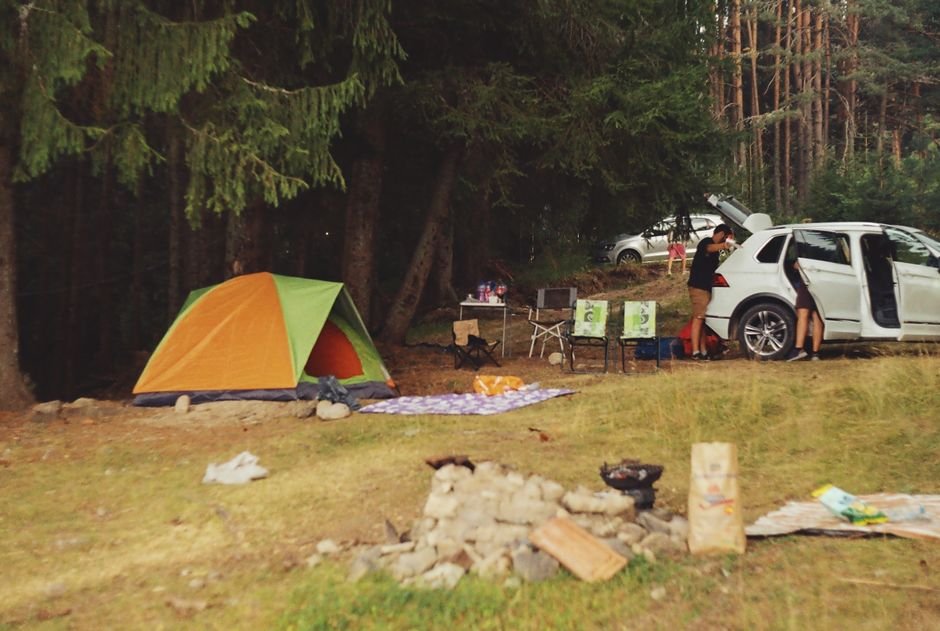
My car for that first weekend looked like an evacuation. The back seat was full to the ceiling, the trunk would not close on the first try, and I had a cooler riding in the front passenger footwell with a bag of charcoal on top of it. Two nights. One person. I had packed for something closer to a siege. When I got to the site I spent thirty-five minutes unloading, and at the end of the trip I could point to maybe a third of it and say honestly that I had used it.
The pile started as a reasonable idea
It began the way these things always begin. I made a list. The list was fine. Then I started imagining scenarios, and every scenario added an object. What if it rains, what if it is colder than forecast, what if the fire will not light, what if I want coffee a second way, what if someone stops by and wants a chair. Each individual addition was defensible. The sum of them was a car I could not see out the back of.
What I was really packing was anxiety. I did not know what a campground weekend actually required, so I substituted volume for knowledge. If I bring everything, I cannot have forgotten anything. That logic is airtight and completely useless, because the cost of bringing everything is not zero.
What overpacking actually costs
I used to think the downside was just a heavier car. It is not. The real cost is time and attention at both ends of the trip, at exactly the hours when you have the least of either.
Friday evening I arrived with an hour of light and spent most of it moving objects from the car to the site, and then moving them again because the picnic table was covered and I needed somewhere to cook. Sunday morning I woke up to a site that looked like a yard sale and spent an hour and a half repacking, because things that came out of a full car in a specific order do not go back in any order.
Both of those hours came directly out of the part of the trip I had driven three hours for. I did not sit by the fire on Friday because I was still unloading when it got dark. I did not walk the shoreline trail on Sunday because I was playing luggage Tetris in a gravel lot.
The two coolers
My favorite specific failure was the coolers. I brought two. One for drinks, one for food, on the theory that opening the drink cooler all day would warm the food. Sound reasoning, genuinely, for a week-long trip with a group.
For one person for two nights it meant I had two large heavy objects to buy ice for, carry, keep in shade, and drain. I bought two bags of ice on the way in. By Sunday both coolers had four inches of cold water in the bottom, my bread was wet, and the total food I had actually eaten was two dinners, two breakfasts and some snacks that did not need refrigeration in the first place.
One small cooler would have held all of it with room left over. I now think of cooler space as the thing that quietly forces every other decision, because a big cooler asks to be filled, and a filled cooler asks for ice, and ice asks for a second trip to a store.
The gear I carried three hours to not touch
Here is a partial list of what came home unused, and it is embarrassing in a very specific way. A folding table, because I did not know the site had a picnic table. A second lantern. A hatchet, because the campground sells bundled firewood already split. Three books, when I read eleven pages all weekend. A full change of clothes for each day plus a spare. Rope. I still do not know what the rope was for.
The thread running through that list is that almost all of it was insurance against not knowing the site. The table, the hatchet and the extra lantern were all substitutes for a thirty-second look at the campground page, which would have told me there was a table, a fire ring, and a light on the bathroom building forty feet away.
The clothes were a different failure. I packed like I was going to a hotel where I would want to look presentable. Nobody at a campground is looking at you. You will wear the same fleece three days running and think nothing of it.
What I stopped bringing, and what I added
Cutting was easier than I expected once I had one trip of real data. Second cooler gone. Table gone. Hatchet gone. Books down to one. Clothes down to what I am wearing plus one warm layer, one dry set to sleep in, and extra socks, which are the only clothing item I have never regretted doubling.
I did add things, which surprised me. A cheap plastic bin with a lid that holds all the kitchen bits, so unloading is one trip instead of nine. A headlamp that lives in the bin permanently so I cannot forget it. A folded tarp, because a dry place to put things on wet ground solves more problems than any single piece of gear I own.
The bin is the biggest change. Everything that is camping-only lives in it year round, packed. I do not repack it, I restock it. That alone removed most of the Friday chaos.
The car is the real limit
The rule I use now is simple and slightly arbitrary, which is why it works. Everything has to fit in the trunk with the back seat empty and clear sightlines out the rear window. If it does not fit, something comes out, and I do not get to negotiate with myself about which scenario it protects against.
That constraint has made every trip better. I unload in ten minutes. I pack up Sunday in twenty-five. I get the fire going while there is still light, which turns out to be the entire reason I drive out there in the first place.
The stuff was never the trip. The stuff was the tax I was paying for not yet knowing what the trip was.