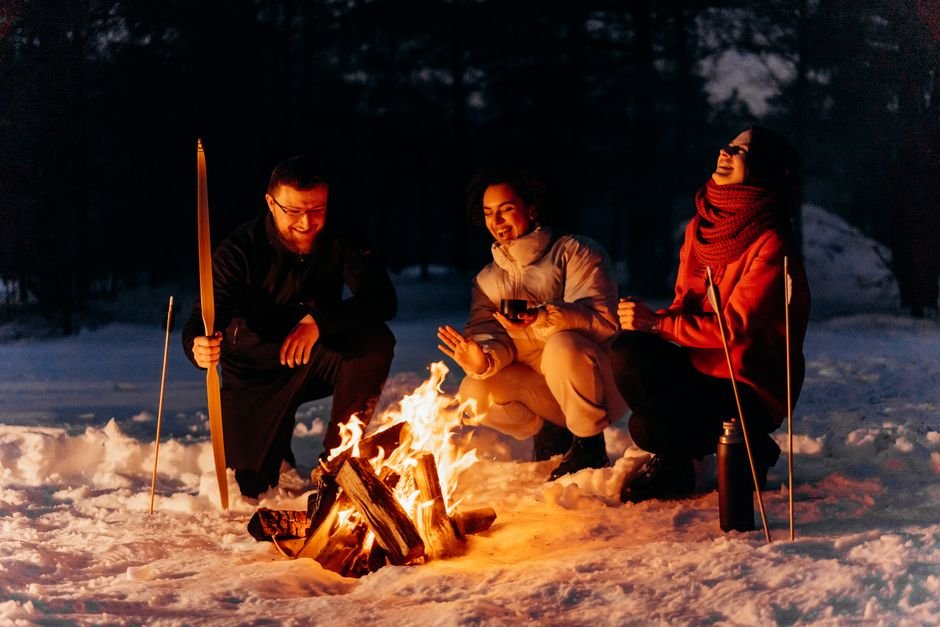
It was a Saturday in early spring at a small county campground about ninety minutes from my place, and I was standing by the fire at nine thirty doing what I always used to do, which was nothing. Feeding sticks in. Watching the coals. Putting off the moment I had to leave the one warm thing in the clearing and go lie down in a nylon room that had been sitting in the shade since four in the afternoon.
That gap, the hour between the fire dying and actually falling asleep, is where I used to lose every cold night. Now it is the most deliberate hour of the trip.
Get Warm Before You Get In, Not After
The single biggest thing I changed is understanding what a sleeping bag actually is. It is not a heater. It has no heat of its own. It is a container for the heat your body is already making, and if you climb in already cold with cold hands and cold feet, you are asking it to do a job it physically cannot do.
So I move first. I walk a lap of the campground loop, fast, ten minutes or so. If it is late and I do not want to be the guy wandering past other people’s tents, I do something dumb behind the car instead: squats, arm swings, jogging in place until I can feel it in my chest. Not enough to sweat, because sweat is the enemy here, just enough that I am obviously producing heat when I get in.
The difference is not subtle. Getting in warm, I am asleep in fifteen minutes. Getting in cold, I have spent whole hours waiting to catch up and sometimes never did.
Change Into Clothes That Have Not Worked All Day
Whatever I wore hiking is damp. Not wet, not obviously anything, but it has been absorbing sweat for eight hours and it is holding moisture against my skin. Moisture pulls heat out of you all night long, quietly, and you will blame the bag or the temperature instead.
I keep a dedicated sleep set at the bottom of my pack. Base layer top and bottom, thick dry socks, a hat. That set does not get worn around camp, does not get worn at the fire where it will pick up smoke and damp, and does not come out until I am about to get in the bag. Sometimes I change inside the tent because it is thirty seconds of misery, but it is thirty seconds instead of eight hours.
The socks especially. I used to think fresh socks at bedtime was a fussy detail. It is not. It is probably the highest return per gram of anything in my pack.
Eat Something Late, On Purpose
Your body makes heat by burning fuel, and it runs that furnace all night whether or not you gave it anything to work with. I used to eat dinner early because it was getting dark and I wanted to cook while I could still see, and then I would go to bed five or six hours later on an empty tank.
Now I eat a proper dinner and I eat something else right before bed. Not a snack sized thing. Something with real fat and substance to it: a handful of nuts, cheese, a couple spoonfuls of peanut butter straight from the jar like a person with no shame. I also drink something hot, which does less for my core temperature than it feels like it does, but it gets me relaxed and it warms my hands while I hold the cup, and both of those matter.
I have also cut way back on drinking around the fire on cold trips. Alcohol makes you feel warm because it moves blood toward your skin, which is exactly the opposite of what you want when you are about to spend nine hours trying to hold heat in your core. I found that out the slow way.
Set The Tent Up So You Never Have To Leave It
Every time I opened the bag in the middle of the night to reach for something, I lost everything I had built up. So the last thing I do before getting in is put every single thing I might want within arm’s reach while lying down.
Headlamp clipped where I can find it blind. Water bottle inside the tent, because a bottle left in the vestibule on a cold night is a block of ice by four. Phone somewhere it will not get lost. Tomorrow’s clothes in a stuff sack next to my head, which does double duty: they are a pillow, and they are not freezing when I put them on.
I also stuff my day clothes and my jacket into the foot of the bag or under the pad rather than leaving them in a pile. Anything left loose in the tent overnight comes back colder than the air, and putting on a cold jacket at six thirty is a bad way to start.
The Warm Bottle Trick, And What Not To Do With It
Before I get in, I boil water and fill a hard sided bottle with a screw lid I trust completely, then push it down into the foot of the bag while I brush my teeth. By the time I get in, the bottom third of the bag is already warm, which means my feet never have to do the warming themselves. Feet are the last part of you to come back once they go, so this is worth the five minutes of fuel.
Two things worth saying plainly. Use a bottle actually made to hold hot liquid and check the lid twice, because a leak in the foot of your bag on a cold night turns an uncomfortable night into a genuinely bad situation. And do not get creative about heat sources inside the tent. No stoves, no lanterns, no charcoal, no propane heater you found in the garage. Anything that burns produces carbon monoxide, you cannot smell it, and cracking a vent is not a fix. The bottle works because there is no flame involved.
The Bathroom Thing Nobody Wants To Discuss
Go before you get in the bag. Then, if you wake up at two and need to go, go. Do not lie there for an hour negotiating with yourself.
Your body spends energy keeping that fluid at body temperature, and more than that, you are not going to sleep properly while you are holding it. The two minutes of cold you spend outside the tent are cheaper than the two hours of half sleep you are about to have. I resisted this for years on the theory that it was warmer to stay put. It never was.
None of this is complicated and none of it costs much. It is just a sequence, run in the same order every time, in the hour when I would rather be doing nothing at all by the fire.