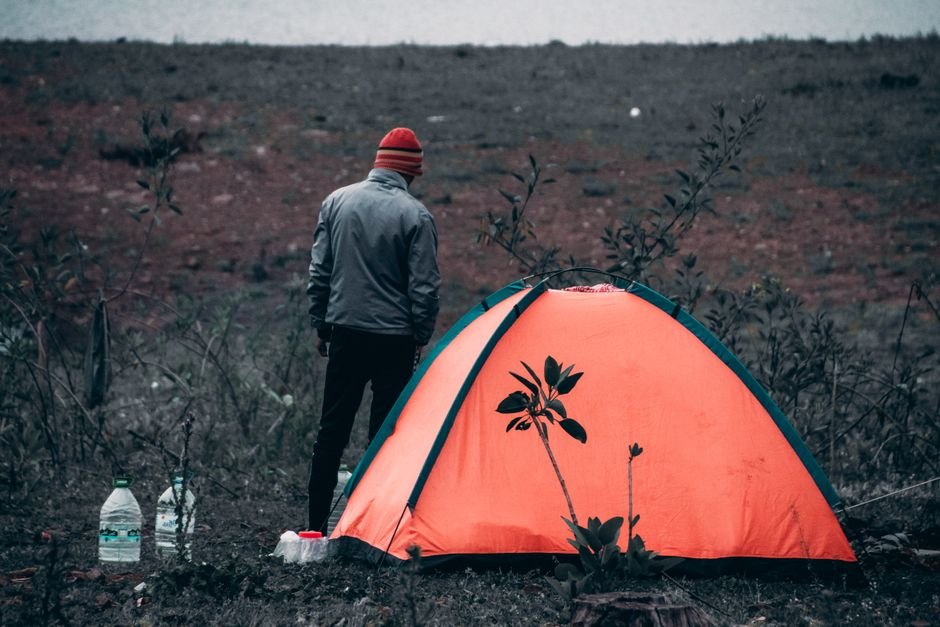
I was awake at six twenty on a Sunday in a state park about an hour and a half from home, and I stayed in the bag until nearly seven thirty. Not because I was tired. I had slept well for once. I stayed because I was warm in a very specific and hard won way, and everything outside the bag was clearly not, and I could see my own breath in the tent.
That hour was not restful. I was awake the whole time, negotiating. Cold mornings are their own separate skill from cold nights, and for a long time I was decent at the second one and terrible at the first.
Awake At Six, Still Horizontal At Seven
The problem is not really the cold. It is the gap. You are lying in a pocket of air you spent nine hours making, and the moment you unzip, all of it is gone and you cannot get it back. Everything you have to do next, standing up, finding clothes, putting on boots that got stiff overnight, happens on the wrong side of that trade.
So you lie there. And lying there is worse than getting up, because your body is not producing much heat while you are motionless and your bag is slowly losing the argument anyway. I have gotten colder in the last hour of lying in a bag than I was at four in the morning, more than once.
The fix, for me, was to make the gap smaller, and almost all of that work happens the night before.
The Night Before Is Half The Morning
Whatever I want to put on in the morning goes inside the bag or under my head. Tomorrow’s shirt and pants go in a stuff sack that becomes my pillow, so they come out at body temperature instead of air temperature. Socks go in the foot of the bag. If it has been really cold, my boot insoles come inside too, because stiff cold insoles are a good chunk of why boots feel so bad first thing.
The stove, the pot, the fuel, the coffee, the lighter, and the water all get staged the night before in one place, ideally inside the tent vestibule or in the car. Fumbling around a picnic table at six thirty looking for a lighter with hands that do not work well yet is a bad time. On cold mornings I want the entire coffee operation to be four motions long.
Water gets special mention. A bottle left outside on a cold night can freeze or get close enough that it takes real fuel to do anything with. I sleep with the water I plan to use for coffee.
My Actual Sequence
When I decide it is time, I do not deliberate. Deliberating is the thing that costs an hour.
First, still inside the bag, I put on the layers I stashed there overnight. Hat first if it is not already on. Then the fleece, sitting up in the bag with the bag still around my waist. This is the whole trick, honestly: get most of the way dressed while still inside the warm thing.
Second, socks, which are already warm because they were at my feet all night.
Third, out, jacket on immediately, boots on, tent unzipped, and I am walking within about forty seconds of committing. Not standing around by the tent. Walking.
I do not fold anything, roll anything, or make any decisions about the day until after that walk. Camp chores at six thirty in the cold with stiff hands are how you end up doing everything twice.
Move First, Coffee Second
This is backwards from how everyone I camp with does it and I am confident about it anyway. Coffee feels like warmth but it does not make much. Movement makes actual heat, and it makes it in about three minutes.
So I take a fast lap of the loop, or walk down to the water, or just do the same silly routine behind the car I do at bedtime. By the time I get back I am generating heat instead of chasing it, and then coffee is a pleasure rather than a rescue. Standing motionless over a stove at six forty five waiting for water to boil while your hands go numb is a genuinely miserable ten minutes and I did it for years.
The other reason to move first is that your hands come back. Trying to light a stove, open a fuel valve, or work a zipper with hands that have not warmed up is frustrating and it is also how things get dropped and broken.
The Car Is Allowed To Help
One of the reasons I mostly camp where I can park is that on a bad morning the car is a legitimate tool and I stopped feeling weird about using it.
If I am truly wrecked, I will start the engine, put the heat on, and sit there for ten minutes with the coffee I made or did not make yet. It is not cheating. It is the difference between salvaging a morning and packing up early in a bad mood. I do check that nothing is blocking the exhaust before I run the engine, which matters if there has been any snow or if I am parked nose in against a bank.
The car is also where I change if it is raining or if the wind has picked up, and it is where wet gear goes so it is not adding damp to the tent.
Why The Bad Ten Minutes Are Worth It
The reason I bother with any of this is that cold mornings, once you are actually up and moving in them, are the best part of the whole trip. Frost on the picnic table. Steam off the lake. The kind of quiet you only get before anyone else in the loop has decided to face it. Low sideways light that makes an ordinary campground look like somewhere worth photographing.
You get maybe forty minutes of that and you cannot see any of it from inside a sleeping bag. Every time I have pushed through the first ten bad minutes I have been glad, and every time I have lain there until eight I have missed the whole thing and still been cold.