This post contains affiliate links. If you buy through them, Mornings by the Campfire may earn a small commission at no extra cost to you.
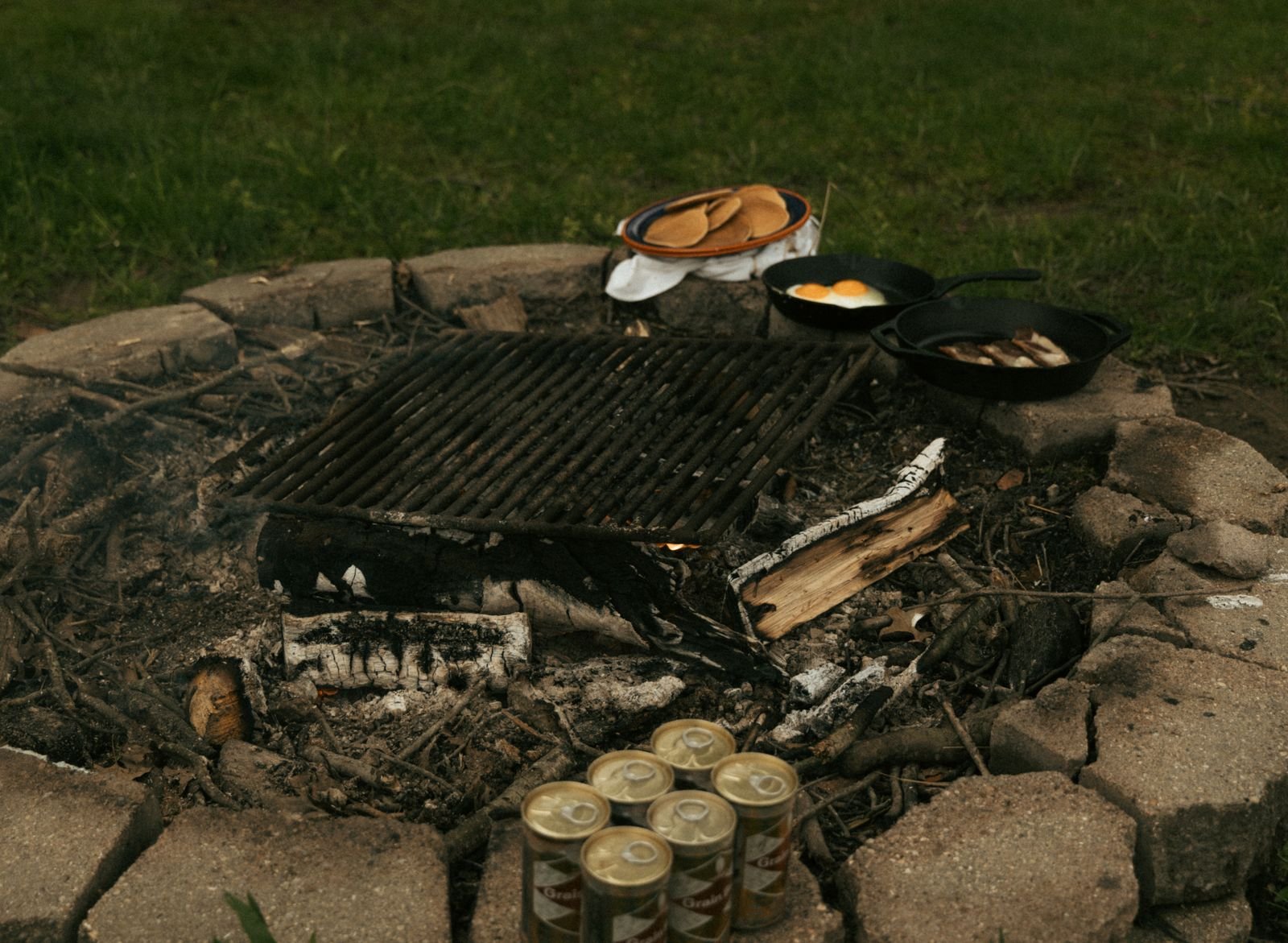
I have written before about how long it took me to stop cooking at camp the way I cook at home, and about how long it took me to start building smaller fires. Those two lessons ended up meeting each other one cold morning, at a fire ring with a rusty grate, when my brother and I tried to cook eggs, bacon and pancakes for four people in two small pans and ended up eating in shifts.
That morning is where this post comes from. It is about the difference one flat, heavy piece of steel can make to a camp breakfast, and about the honest downsides of carrying one.
The two-pan problem
Most camp breakfasts I have cooked come down to the same juggling act. One pan for the eggs. One pan for the bacon, if there is room on the grate. Pancakes wait until one of the pans is free. By the time the last thing is cooked, the first thing is cold, and whoever is cooking eats last, standing up, with a spatula still in one hand.
A campfire grate makes this worse, not better. The heat is uneven, the bars are spaced for burgers rather than eggs, and only part of the grate sits over the best coals. You end up shuffling pans around all morning trying to find the hot spot.
Cooking on one big flat surface
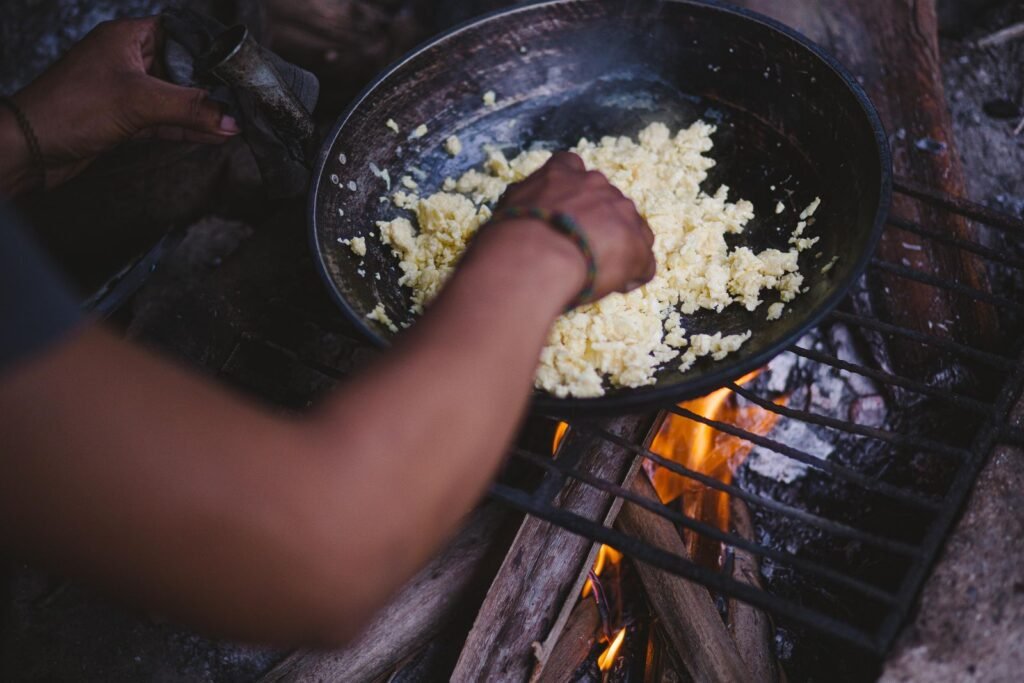
The fix, when I finally saw it at a neighbouring site, was obvious. Instead of several small pans, one large flat steel surface laid across the grate. Bacon at one end, eggs in the middle, pancakes wherever there is space, and everything coming off at roughly the same time. It is the diner flat-top idea brought to a fire ring.
What struck me watching it was not just the space. It was how calm the cook looked. No juggling. No pans balanced on the edge of the ring. Just one surface, a spatula, and a line of food moving from the hot side to the cooler side as it finished.
It wants coals, not flames
This is where the small-fire lesson comes back. A flat steel surface over roaring flames is going to be scorching in the middle and useless at the edges. Over a bed of settled coals, it heats more evenly and gives you a hotter side and a cooler side to work with. So the routine becomes: get the fire going early, let it burn down while the coffee happens, and cook when the flames have mostly gone.
It takes a while to heat, and longer to cool
A thick piece of steel does not get hot in thirty seconds. It needs time on the grate before the first thing goes on. And once breakfast is done, it stays hot for a long time. That matters at a campsite, where children, dogs and sleepy adults wander past the fire ring. Treat it as hot until you have checked, and plan where it will sit while it cools.
A griddle I have been looking at
Cooking Steels makes pizza steels and grill griddles, and they describe their steel as versatile indoors or outdoors, in the oven, on the grill, or over an open flame. That last part is what caught my attention for camp mornings. If you want to see what they make, the banner below goes straight to their site.
Before buying any griddle for a fire, measure the grate you usually cook on and think about whether the size you are looking at will actually sit on it safely. A griddle that overhangs the ring or rocks on uneven bars is worse than two small pans.
The honest downsides
I would not be writing this blog properly if I pretended a slab of steel was the answer to everything.
It is heavy
Steel thick enough to hold heat well is not something you carry on your back. This is car-camping gear, for sites where the car is parked a few steps from the fire ring. If you are walking in to your site, leave it at home.
It needs looking after
Bare steel and morning dew are not friends. Follow the maker’s care instructions for seasoning and cleaning, dry it properly before it goes back in the car, and do not pack it away damp at the end of a trip.
Check the rules first
Some campgrounds have fire restrictions, especially in dry seasons, and some only allow cooking on the provided grate or on a stove. Know the rules where you are before you plan a breakfast around a fire.
How a flat-top morning goes now
Fire lit as soon as I am up. Coffee on the stove while it burns down. When the flames settle, the griddle goes on the grate to heat while I set out the food. Bacon first, at the hot end, because it gives the steel a bit of fat to work with. Pancakes in the middle when the bacon moves over. Eggs last, because they are quick and nobody wants cold eggs. Then everything comes off together, and for once the cook sits down at the same time as everyone else.
The griddle comes off the grate onto a safe spot to cool while we eat. The fire gets put out properly, the way I have written about before, before anyone starts packing up.
Eating at the same time
The thing I remember most from that two-pan morning with my brother is not the cold eggs. It is that we never actually sat down together. One of us was always standing at the fire. That is the part a flat-top morning changes. Breakfast stops being a relay and goes back to being a meal.
If that sounds like the kind of morning you want at camp, you can browse Cooking Steels griddles here. Then let the fire burn down, and cook on the coals.
Photos: Taylor Thompson and Denniz Futalan via Pexels.